
Explore our diverse research areas, groundbreaking studies and remarkable medical research achievements
“Overall, the findings by Liu and colleagues may herald a new honour paradigm for blood donation, or alternatively, a new non-cash model for rewarding it. Only time will tell.”
——TheBMJ Editorials (DOI: 10.1136/bmj.s100)
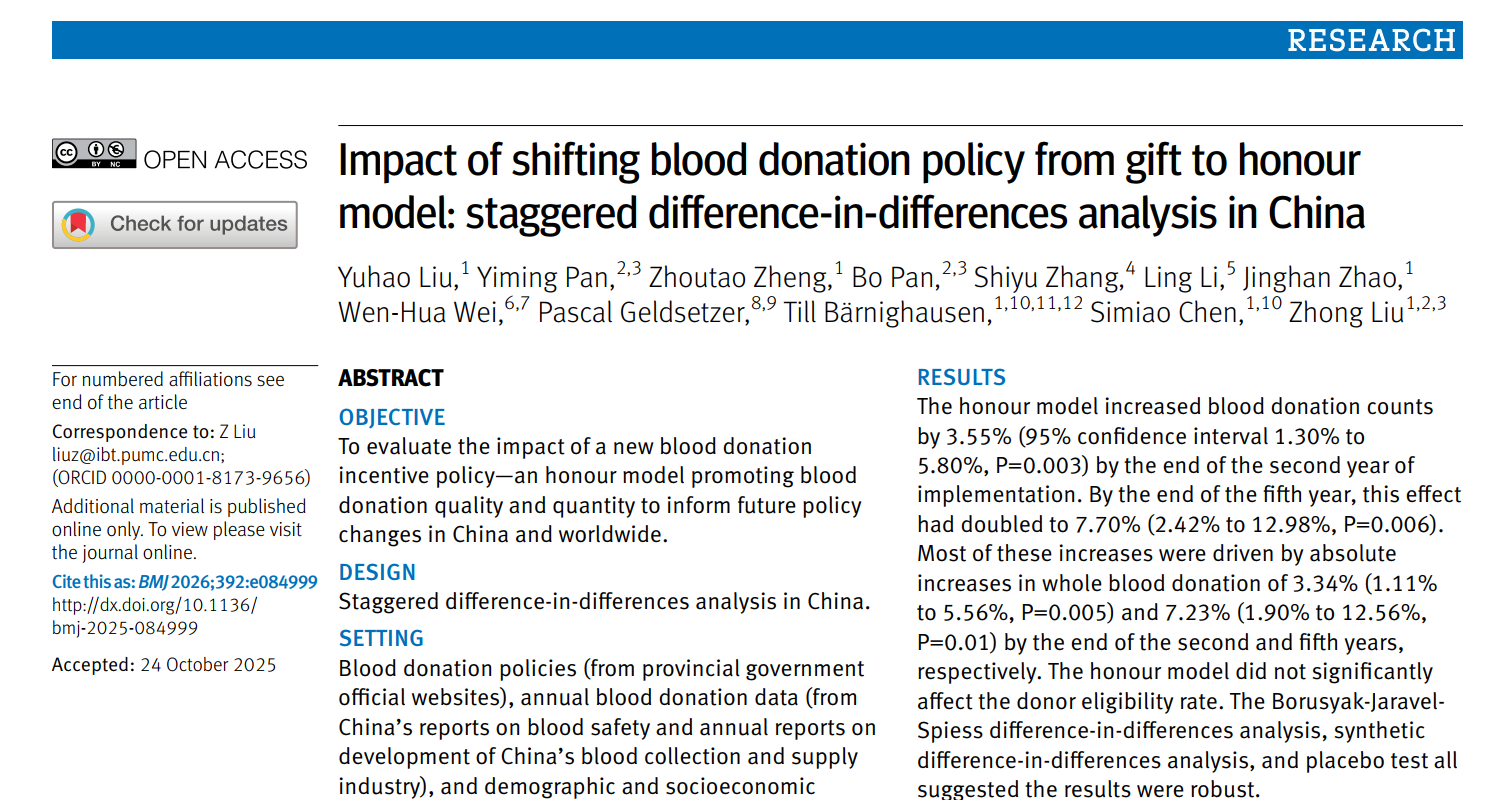
Prof. Zhong Liu, Prof. Simiao Chen and the team published an original study in The BMJ entitled “Impact of shifting blood donation policy from gift to honour model: staggered difference-in-differences analysis in China.” The BMJ simultaneously published a dedicated editorial and news report. The study was also disseminated through EurekAlert!, the official science-news platform of the American Association for the Advancement of Science (AAAS), and more than 3,000 major media platforms worldwide, highlighting China’s innovative contribution to global public health policy.
A safe, sufficient, and accessible blood supply is fundamental to healthcare. In the early twentieth century, the commercial model helped secure blood supplies but generated serious safety, equity, and ethical concerns. From the 1970s, the voluntary, non-remunerated “gift model,” grounded in altruism, became the global mainstream. Yet its limitations, together with population ageing and growing imbalances between donors and recipients, have renewed blood shortages in many countries.
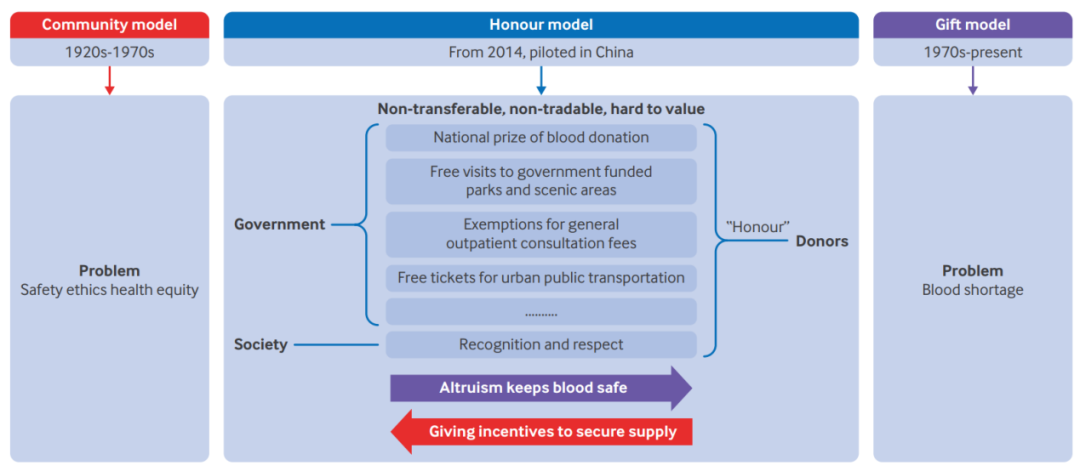
Drawing on innovative Chinese practices, the researchers proposed an “honour model” centred on honour and social recognition. Frequent donors receive non-cash public privileges, such as convenient healthcare access and free public transport. These benefits are non-transferable, non-tradable, and hard-to-value.The study reviewed provincial and municipal incentive policies and constructed a dynamic staggered difference-in-differences design. The Sun and Abraham estimator served as the primary model, supplemented by synthetic difference-in-differences and other modern estimators, provincial and city-level analyses, matching-based sensitivity analyses, mechanism tests, and a placebo test. Outcomes included total donations, whole-blood donations, and donor eligibility rates.
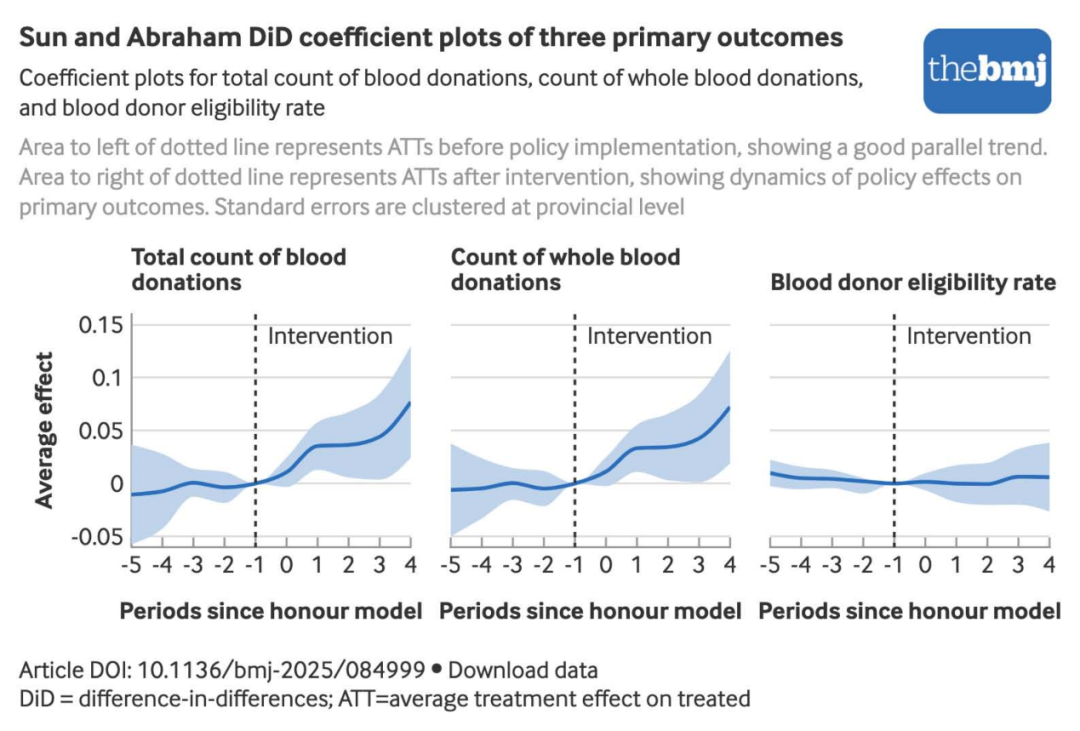
The honour model increased total donations by 3.55% in the second year after implementation and by 7.70% in the fifth year. Whole-blood donations rose by 3.34% and 7.23%, respectively. Donor eligibility rates did not change significantly, indicating that expanded supply was not achieved at the expense of blood safety. Multiple robustness and sensitivity analyses supported the stability of these findings.
The results suggest that honour-based, non-monetary incentives can promote sustained donor participation and expand blood supply. By preserving altruism while adding public recognition and practical privileges, the model offers an adaptable theoretical and policy framework across different cultural and institutional settings.
The accompanying BMJ editorial praised both the theoretical and methodological innovation of the study, noting that rigorous quasi-experimental methods strengthened its credibility. The findings could support stronger blood-donation systems and emergency preparedness while contributing Chinese evidence and solutions to a global challenge.

