Explore our diverse research areas, groundbreaking studies and remarkable medical research achievements
ACROSS2 Study by Prof. Wang Jie’s Team Published in CA: Pioneering a Precision Treatment Paradigm for EGFR-Mutant NSCLC with Concomitant Mutations
Epidermal growth factor receptor (EGFR) mutations are primary lung cancer drivergene, standardly managed with third-generation tyrosine kinase inhibitors (EGFR-TKIs). However, patients withtumor suppressor gene (TSG) co-mutations, such as TP53, showed shorter progression-free survival (PFS) and faster resistance on monotherapy.
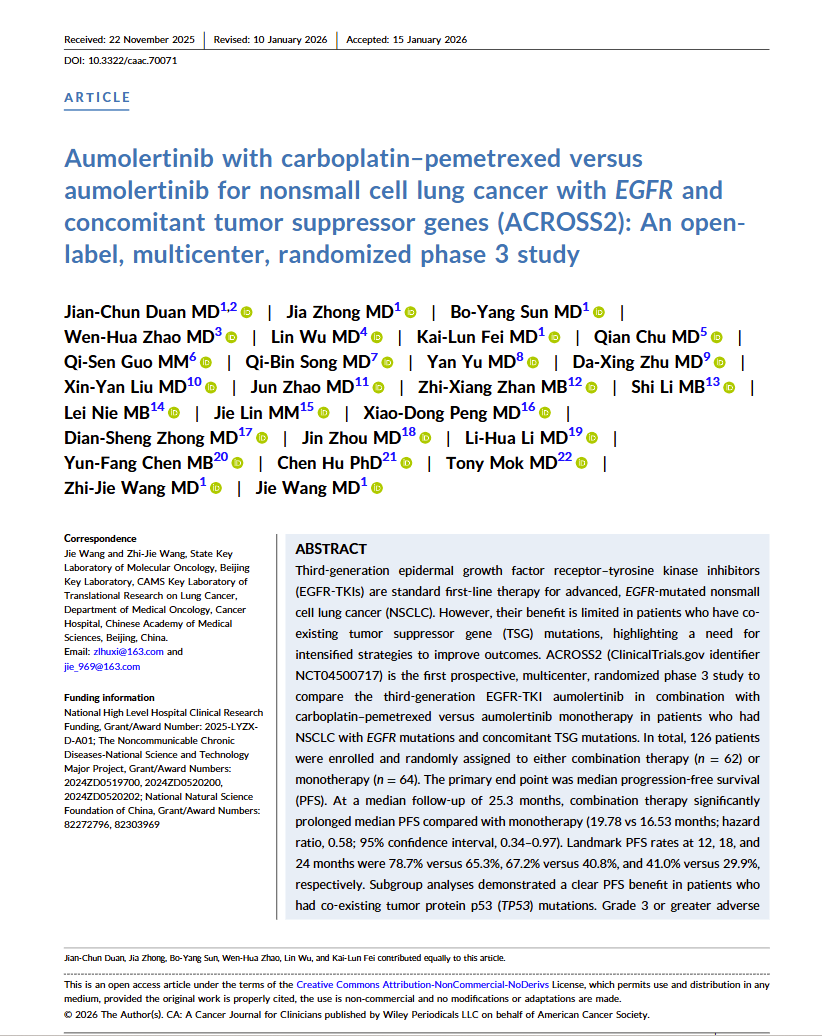
On March 12, 2026, ACROSS2 study initiated by Professor Wang Jie's team from the National Cancer Center, Chinese Academy of Medical Sciences—was published in CA: A Cancer Journal for Clinicians. As the world's first prospective phase III study targeting EGFR-mutant NSCLC with TSG co-mutations, it demonstrated that first-line aumolertinib plus chemotherapy significantly prolongs PFS, particularly in patients with TP53 co-mutations. These findings furnish high-level evidence and a novel Chinese paradigm for precision lung cancer therapy.
Clinical Challenge
TP53 co-mutations portend worse monotherapy outcomes, yet universal chemotherapy adds toxicity without benefit for non-co-mutated patients, and no biomarker guides optimal stratification. Professor Wang's team addressed this with a biomarker-driven intensified strategy, marking a two-decade milestone.
Prospective Conceptualization
In 2004, Professor Wang hypothesized that precision oncology demands dynamic peripheral blood monitoring—beyond tissue biopsies—for truly personalized care. Despite prevailing skepticism about ctDNA reliability, the team steadfastly pursued real-time monitoring, embarking on two decades of dedicated exploration.
Foundational Framework
In 2009, they established a peripheral blood ctDNA detection system. The BENEFIT trial proved blood testing could replace tissue biopsy—a practice later incorporated into global guidelines. Follow-up trials, including CHALLENGE and FLAME, further confirmed its reliability and pinpointed candidates for intensified therapy in patients with uncleared ctDNA.
Clinical Outcome
To optimize therapeutic strategies for patients harboring EGFR and TSG co-mutations, the team designed the ACROSS2 study—the first biomarker-stratified phase III trial to compare aumolertinib plus chemotherapy versus monotherapy. Over six years, this prospective trial demonstrated that the combination regimen significantly prolongs PFS, thereby successfully realizing the team's long-standing vision of biomarker-driven stratified treatment.
Key Highlights of ACROSS2:
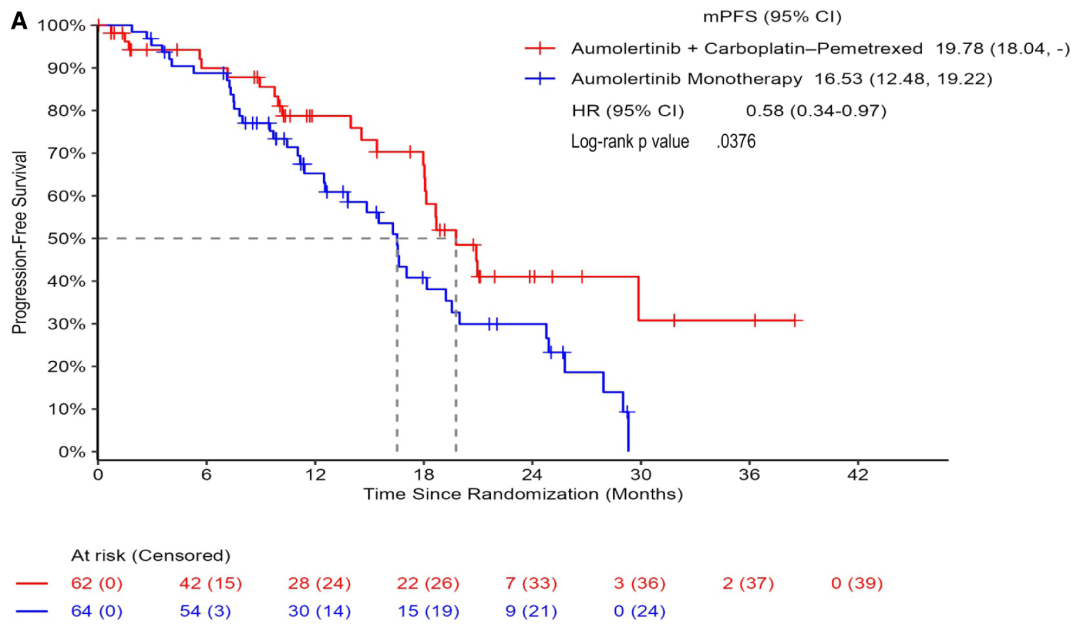
First level III evidence for intensified therapy benefit in EGFR+TSG co-mutated NSCLC:Aumolertinibwith carboplatin-pemetrexed extended median PFS by over 3 months versus monotherapy (19.78 vs. 16.53 months), reducing disease progression or death risk by 42% (HR="0.58).
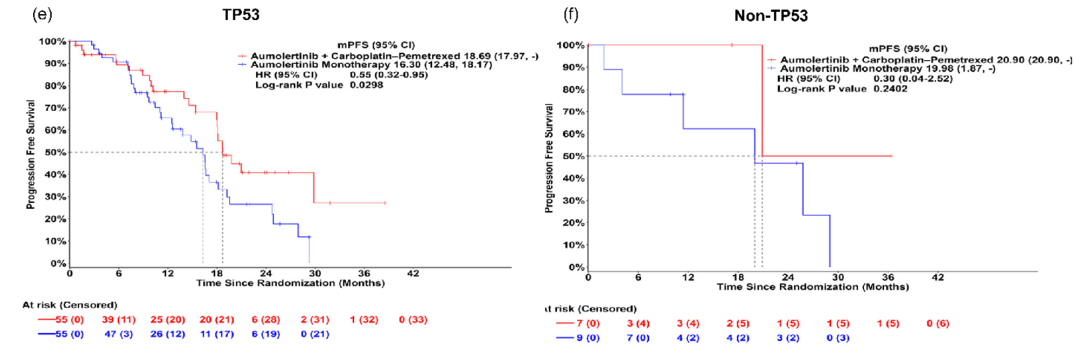
Precise Patient Selection: Subgroup analysis identified TP53 co-mutated patients as primary beneficiaries of combination therapy (HR="0.55)," especially those with standalone TP53 mutations (HR="0.50)." Patients without co-mutations showed no significant benefit, providing definitive biomarker evidence to prevent overtreatment.
Manageable Safeand Clinically Scalable: The combination regimen showed high compliance and controllable safety, with 79.6% completing at least four carboplatin cycles. No new safety signals or treatment-related deaths occurred.
This publication culminates over 20 years of systematic research by Prof. Wang's team. Following landmark studies such as BENIFIT, CHALLENGE, FLAME, and ACROSS1, ACROSS2 finalizes the evidence chain, successfully shifting global lung cancer care from empirical treatment to precise, biomarker-stratified paradigms.
Author: Professor Wang Jie