
Explore our diverse research areas, groundbreaking studies and remarkable medical research achievements
Supported by a series of high-quality clinical studies, sodium–glucose cotransporter 2 inhibitors (SGLT2i) have demonstrated well-established long-term cardiovascular and renal protective effects and play an important role in the management of chronic conditions, including heart failure, diabetes, chronic kidney disease, and chronic cardiovascular disease. However, the efficacy and safety of short-term SGLT2i use during the perioperative period of cardiac surgery remain unclear.
SGLT2i exert long-term protective effects through multiple pathways, including the regulation of inflammatory responses, oxidative stress, cellular energy metabolism, systemic metabolic homeostasis, and autonomic function. These pleiotropic mechanisms may provide potential organ protection during the perioperative period of cardiac surgery. However, existing evidence primarily comes from studies of long-term interventions in chronic disease settings, and evidence remains lacking as to whether SGLT2i can provide rapid and effective cardiovascular and renal protection in the short-term perioperative setting. Regarding safety, whether short-term perioperative SGLT2i use increases the risk of adverse events such as diabetic ketoacidosis (DKA) also remains controversial. Current guidelines emphasize the urgent need for high-quality evidence to guide updates to perioperative SGLT2i management strategies.
Against this background, the principal investigator team at the National Clinical Research Center for Cardiovascular Diseases, Fuwai Hospital, Chinese Academy of Medical Sciences, conducted the DAPA-CS trial (Dapagliflozin Therapy in Cardiac Surgery), providing the first systematic evaluation of the efficacy and safety of perioperative dapagliflozin use in cardiac surgery. The findings were recently published in the European Heart Journal.
This single-center, open-label, randomized controlled trial with blinded endpoint assessment enrolled 178 adults with type 2 diabetes scheduled for elective cardiac surgery with cardiopulmonary bypass, none of whom had received SGLT2i before enrollment. Patients at high risk, including those with a history of DKA, severe renal impairment, hypovolemia, hypotension, or dehydration, were excluded. Participants were randomly assigned in a 1:1 ratio to the dapagliflozin group or the control group. The dapagliflozin dosing regimen was designed based on its pharmacokinetic characteristics: treatment was administered for at least three days before surgery, discontinued 24 hours before surgery, and resumed postoperatively once oral intake was re-established, continuing through postoperative day 5. The primary endpoint was the postoperative high-sensitivity cardiac troponin I (hs-cTnI) level, and the key secondary endpoint was perioperative acute kidney injury (AKI). Safety outcomes included DKA, blood gas and acid–base parameters, and wound infections.
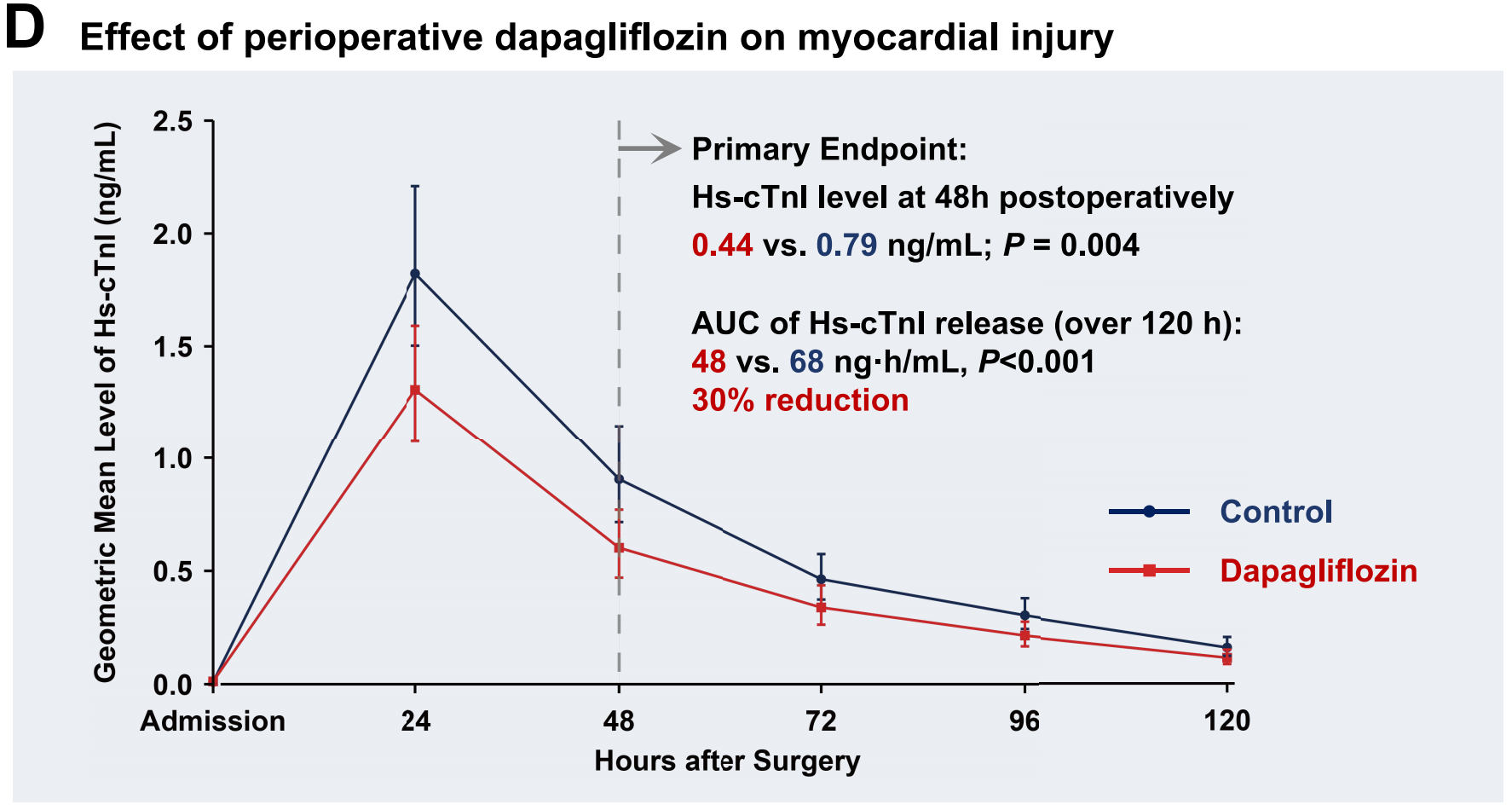
The results showed that hs-cTnI levels at 48 hours after surgery were significantly lower in the dapagliflozin group than in the control group (0.44 [0.26–1.16] vs 0.79 [0.43–1.50] ng/mL, P = 0.004), and the postoperative hs-cTnI area under the curve over 120 hours was approximately 30% lower. These findings suggest that, in addition to their cardioprotective effects in the long-term management of chronic diseases, SGLT2i may also exert rapid myocardial protective effects during acute perioperative stress. The incidence of postoperative AKI did not differ significantly between the groups (40.7% vs 41.0%, P = 0.977), while the postoperative serum creatinine area under the curve over 120 hours was approximately 8% lower in the dapagliflozin group than in the control group. This finding may be related to the short observation period, as previous studies suggest that the renal protective effects of SGLT2i may take time to emerge.
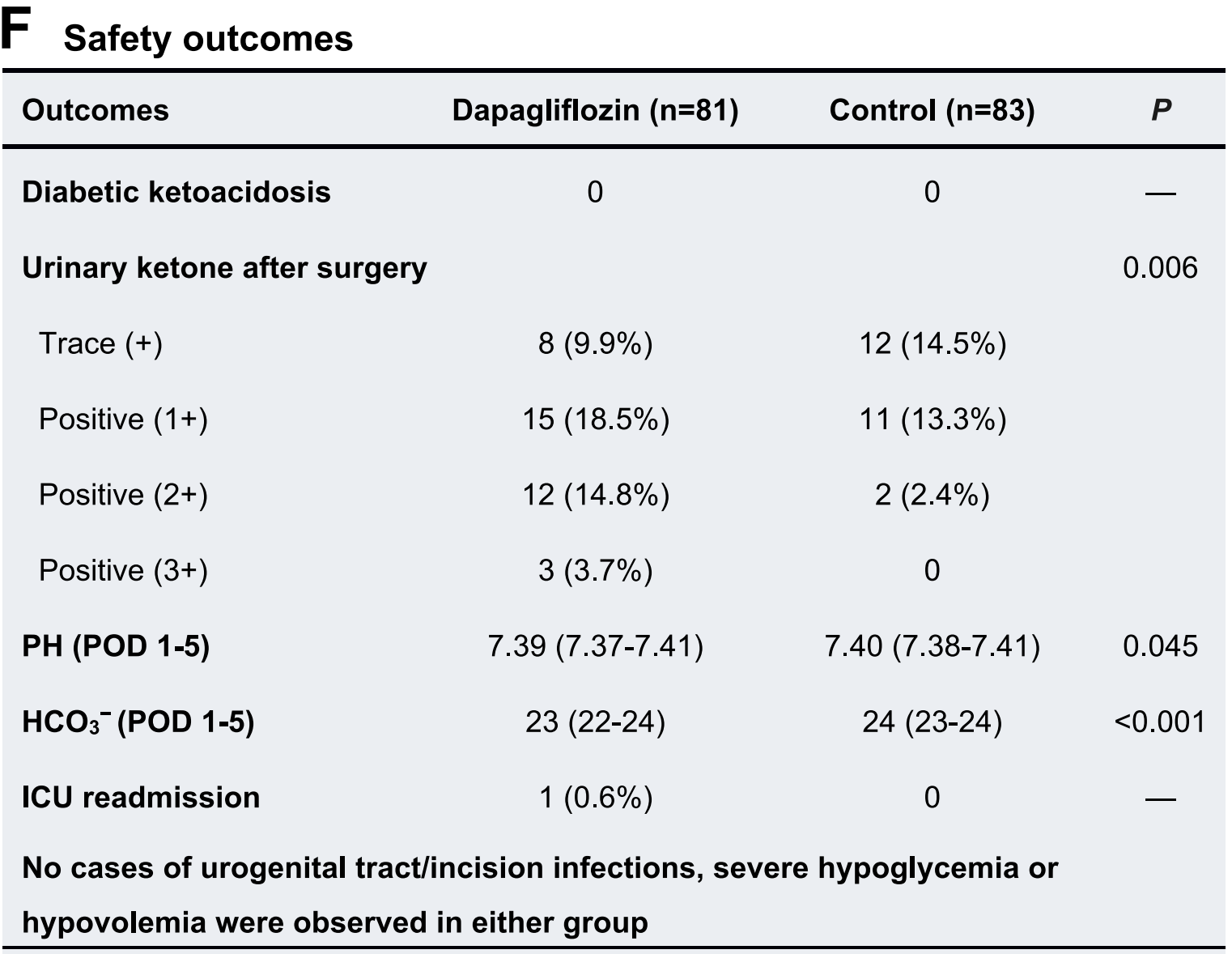
Regarding safety, the proportion of patients with positive postoperative urine ketone tests was significantly higher in the dapagliflozin group, and blood pH and serum bicarbonate levels were slightly lower than in the control group. However, no patient met the diagnostic criteria for DKA. Furthermore, no related complications, such as severe hypoglycemia or urogenital infections, were observed in either group. Notably, the study established a perioperative intervention and management strategy that balanced efficacy and safety: dapagliflozin was discontinued 24 hours before surgery and restarted only after oral intake had resumed. This avoided continued dosing during perioperative fasting and reduced the metabolic conditions that predispose patients to DKA. The study protocol also incorporated regular perioperative blood gas monitoring to facilitate the timely detection and management of potential acid–base disturbances at a subclinical stage. This standardized management framework aimed to minimize the risk of DKA while preserving the potential therapeutic benefits of SGLT2i.
As the first randomized controlled clinical trial worldwide to evaluate perioperative SGLT2i use in cardiac surgery, this study demonstrated that perioperative dapagliflozin use was feasible and had a favorable safety profile under standardized medication management and appropriate perioperative monitoring, and that it may provide some degree of myocardial protection. The findings may serve as an important reference for the development and updating of international clinical guidelines. However, the study had a single-center, open-label design and a relatively limited sample size. Furthermore, participants were at low risk of DKA and received appropriate perioperative management. The findings therefore require further validation in larger, multicenter randomized controlled trials before broader application.
Original publication:
Li Z, Chen R, Han J, Zhou H, Zeng Z, Zhao Y, Liu S, Zhang H, Zheng Z. Perioperative dapagliflozin in diabetic patients undergoing cardiac surgery: the DAPA-CS trial. Eur Heart J. 2026 Apr 8:ehag249. doi:10.1093/eurheartj/ehag249.

