
Explore our diverse research areas, groundbreaking studies and remarkable medical research achievements
On May 29, 2026, a research team led by Dr. Li Yanxin from the Institute of Basic Medical Sciences (IBMS), Chinese Academy of Medical Sciences (CAMS) & Peking Union Medical College (PUMC), in collaboration with Dr. Jiao Jianwei from the Institute of Zoology, Chinese Academy of Sciences (CAS) and others, published an important study titled "Decoding the spatiotemporal development of human meninges" in Cell. This study reveals a groundbreaking spatiotemporal framework of human meningeal development, the functional differences among distinct meningeal layers, and the key mechanisms by which meningeal immunity influences brain development. It provides new insights into meningeal developmental biology and meningeal-brain interactions, and offers an important theoretical basis and potential targets for the diagnosis and treatment of meningeal-related diseases.
The meninges are not merely a "protective sheath" enveloping the brain, but rather a dynamic microenvironment involved in central nervous system (CNS) development. For a long time, due to the complexity of cellular interactions and the limitations of static perception, how the human meninges develop and their interactive mechanisms with brain parenchyma have remained an unsolved mystery.
To address this gap, the present study systematically characterized meningeal cellular development from 6 to 23 weeks of gestation, achieving three landmark breakthroughs:
First, reconstructing the developmental timeline. The study overturns the traditional assumption of synchronous tri-layer meningeal development, and for the first time clearly reveals the temporal developmental rules of the three meningeal layers. The three layers of the human meninges—the dura mater, arachnoid mater, and pia mater—are not formed synchronously; the pia mater is the earliest-developing "pioneer" layer. The team further revealed that meningeal fibroblasts from each layer not only constitute the structural foundation, but also actively express genes closely associated with barrier properties, neurotransmitter transport and clearance, synaptic function regulation, and lipid metabolism. This discovery fundamentally transforms the traditional view of the meninges as an inert encapsulating structure, redefining them as a highly compartmentalized, functionally active "dynamic microenvironment system" that actively participates in and shapes CNS development and homeostasis.
Second, establishing a new axis of immune regulation. The study reveals the precise construction mechanism of the meningeal immune microenvironment: the pia mater actively recruits and spatially organizes specific resident macrophages through the CXCL12-CXCR4 signaling pathway. Most importantly, the team discovered for the first time that a subset of Trem2⁺ macrophages can directly regulate the development of Cajal-Retzius(CR) cells—the "architects" of the cerebral cortex—thereby establishing an ascending regulatory axis of "meningeal immune cells–cerebral cortical development," elevating the meninges from a mere "protective sheath" to a "regulatory hub" commanding cortical construction.
Third, expanding the field's understanding of meningeal vascular and lymphatic system development. The study further dissects the developmental rules of meningeal blood vessels and lymphatics, and through functional experiments, reveals the close cooperation between macrophages and endothelial cells via classical signaling pathways, providing a new perspective for understanding the construction of the neurovascular unit.
This study not only took the lead in decoding the rules of human meningeal development amid fierce international competition, but also mechanistically deciphered how the meninges, as an immune-active interface, engage in "dynamic dialogue" with the brain. This achievement opens new paths for understanding the pathological mechanisms of neurological diseases such as autism and Alzheimer's disease, and lays a theoretical foundation for innovative therapies targeting the meningeal immune microenvironment.
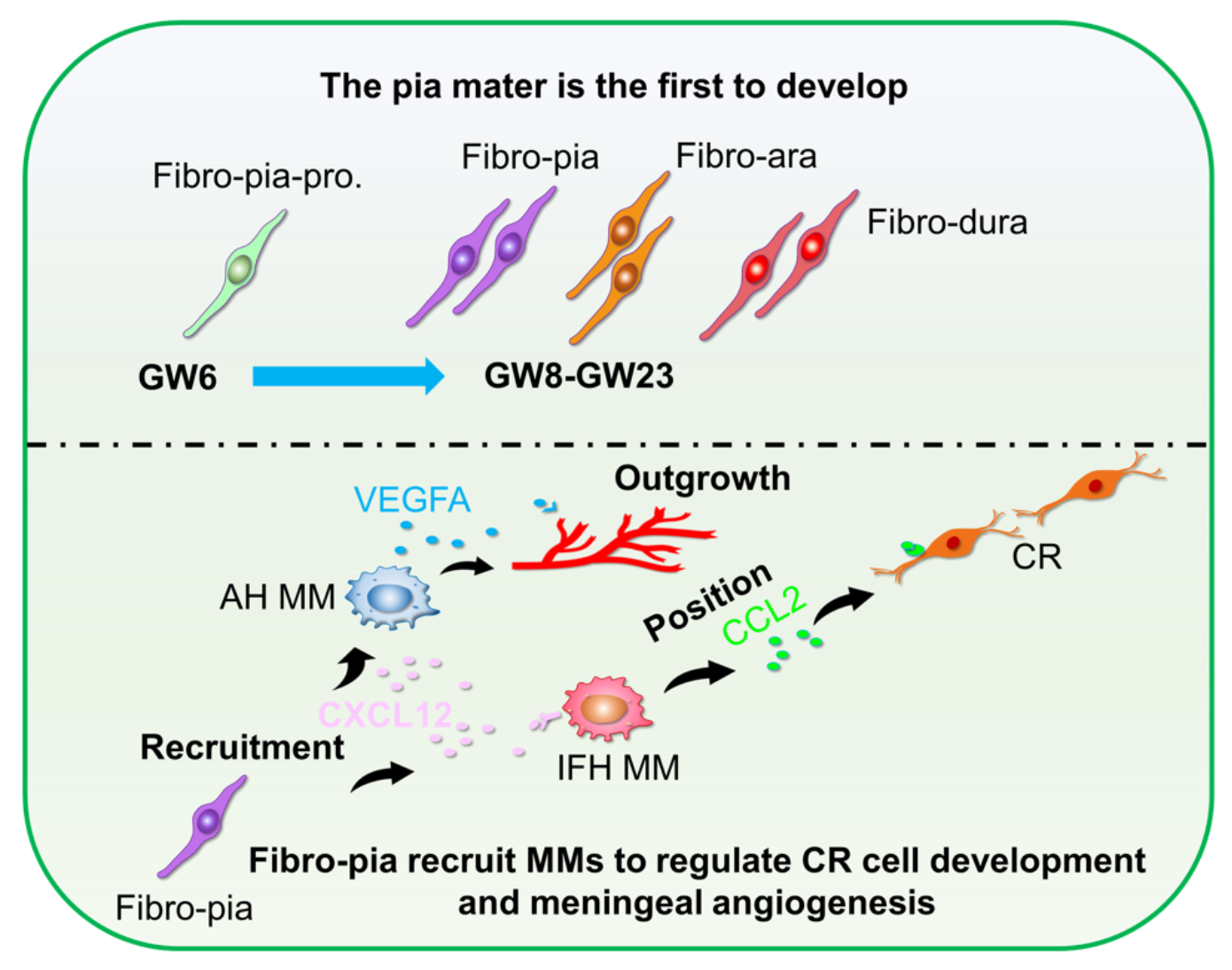
(Schematic diagram of meningeal developmental regulatory mechanisms)
Dr. Jiao Jianwei, Professor at the Institute of Zoology, CAS; Dr. Dong Ji, Professor at Guangzhou National Laboratory; and Dr. Li Zhongqiu, Distinguished Professor at the School of Advanced Interdisciplinary Medical Sciences & the Fifth Affiliated Hospital, Zhengzhou University, serve as co-corresponding authors of this study. Dr. Li Yanxin (IBMS, CAMS & PUMC), Prof. Li Zhongqiu, and She Yong, a Ph.D. student in Prof. Dong Ji's lab, are the co-first authors.
About Dr. Li Yanxin's Lab
Dr. Li Yanxin is a Principal Investigator, Tenure-track Assistant Professor, and Doctoral Supervisor in the Department of Cell Biology at the Institute of Basic Medical Sciences, Chinese Academy of Medical Sciences & Peking Union Medical College School of Basic Medicine.
Her research focuses on brain development, neuroimmunity, and disease mechanisms. By integrating single-cell omics, spatial transcriptomics, multi-omics, human-derived models, and functional experiments, she dissects cell fate, regional specialization, neuroimmune interactions, brain barrier construction, and disease susceptibility mechanisms during brain development. Meanwhile, her lab is also expanding into AI-driven multimodal data integration, discovering key cell states, regulatory networks, and novel disease mechanisms from human brain development and disease maps. As first author or corresponding author (including co-authorship), she has published multiple SCI papers in renowned academic journals including Cell (2 papers) and Cell Stem Cell (2 papers).

