
Stay tuned for our latest campus events, research advances and inspiring stories across all medical fields
To thoroughly implement the strategic deployment for building a science and technology powerhouse, proactively adapt to the higher demands of scientific research governance in the new era of technological innovation, further consolidate the institutional foundation of research integrity, science and technology ethics, human genetic resource management, and laboratory safety, and prevent and mitigate major risks in scientific and technological innovation, the Academy convened the 2026 Research Standardization Training Conference on June 25, 2026. President Ji Xunming attended and delivered an address. The conference was presided over by Vice President Wu Chen.
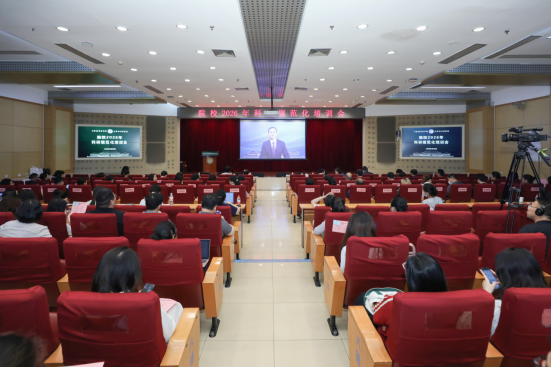
In his address, President Ji Xunming emphasized that medical scientific and technological innovation is vital to national security and public well-being, and that strictly observing research standards and upholding academic integrity constitute the cornerstone of sustainable innovation. He noted that this training session not only implements the National Health Commission's special rectification plan for research integrity but also serves as a critical measure for the Academy to reshape its research and innovation paradigm, overcome bottlenecks in research development, and foster a sound academic ecosystem. President Ji put forward three specific requirements for all faculty and students: first, to raise political awareness and align research directions with national strategies; second, to be bold in pioneering new approaches and establish a demand-oriented research paradigm; and third, to strictly uphold academic integrity and firmly safeguard the bottom line and red lines of research development.
The training conference featured lectures by Director Liu Zhanqiang from the Department of Science, Technology and Education of the National Health Commission; Academician Liu Depei from the Institute of Basic Medical Sciences; Professor Zhai Xiaomei from the School of Population Medicine and Public Health; Director Zhu Min from the China National Center for Biotechnology Development; Researcher Yuan Junpeng from the National Science Library of the Chinese Academy of Sciences; Professor Yang Qiwen and Professor Wu Zhihong from Peking Union Medical College Hospital; Professor Li Ning from the Cancer Hospital; Researcher Bao Linlin from the Institute of Laboratory Animal Science; Deputy Director Chen Xuannan from the Division of Science and Technology System Development at the Academy Headquarters; and Mr. Sun Ruyu from the Division of Major Projects. Their presentations covered a wide range of topics, including the norms and significance of scientific research, policy requirements for research integrity, ethical standards in biomedical research, regulatory approval procedures for clinical translation of emerging biomedical technologies, management of human genetic resources, quality standards for clinical research, experimental data integrity, laboratory safety protocols, management measures for the Academy’s Innovation Project, and the development and resource management of the science and technology platform system.
Attendees at the main venue included principal leaders of affiliated institutes and hospitals, administrators overseeing research and laboratory safety, officials and staff responsible for research integrity and laboratory safety, principal investigators of major national science and technology programs, heads of Innovation Projects, directors of provincial- and ministerial-level or above science and technology platforms, and staff from relevant departments at the Academy Headquarters. Branch venues were set up at each institute and hospital for online participation. Following the conference, assessments based on the training content were administered to researchers, administrative personnel, and graduate students across all affiliated institutes and hospitals.
Science and Technology Management Office

