
Stay tuned for our latest campus events, research advances and inspiring stories across all medical fields
From July 14 to 15, 2026, the launch meeting of the Chinese Academy of Medical Sciences (CAMS)–The Lancet Commission on Reducing the Stroke Burden in China (hereinafter referred to as “the Commission”) was successfully held in Beijing in a hybrid format. Commissioners and distinguished experts from domestic and international research institutions—including the World Health Organization (WHO), the University of Oxford, Imperial College London, the University of Pittsburgh, Ludwig Maximilian University of Munich, Lund University, Isfahan University of Medical Sciences, The Lancet, Capital Medical University, and CAMS & Peking Union Medical College—attended the meeting. Participants engaged in in-depth discussions on core topics such as the current stroke disease burden in China, gaps in the prevention and control system, and the optimization of evidence-based policies, officially kicking off the Commission’s systematic research and practical work. President Ji Xunming, President of CAMS & PUMC, attended the meeting as Chair of the Commission.
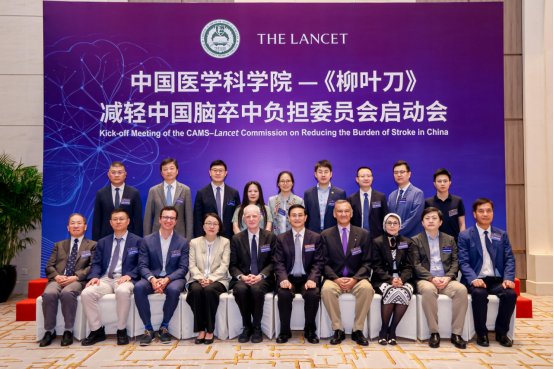
Group Photo of Commissioners of the CAMS–The Lancet Commission on Reducing the Stroke Burden in China
In his opening address, President Ji Xunming noted that WHO data shows the lifetime risk of stroke among global adults has increased by 50% over the past two decades, and that in 2026, the WHO designated stroke as a global public health priority for the first time. In China, stroke remains a major chronic non-communicable disease characterized by high incidence, high disability, and high recurrence rates, ranking among the leading causes of death and disease burden. Against this backdrop, CAMS and The Lancet jointly established the “Commission on Reducing the Stroke Burden in China.” Leveraging top-tier multidisciplinary teams from both home and abroad, the Commission will focus on three core areas: assessing the disease burden, analyzing gaps across the entire prevention and control chain, and developing evidence-based policy tools. Adhering to the principles of scientific rigor and pragmatic implementation, the Commission will systematically integrate China’s practical experience in policy design, preventive interventions, and clinical diagnosis, treatment, and rehabilitation. It aims to distill replicable and scalable prevention and control pathways to support the Healthy China initiative and contribute Chinese solutions to global health governance.
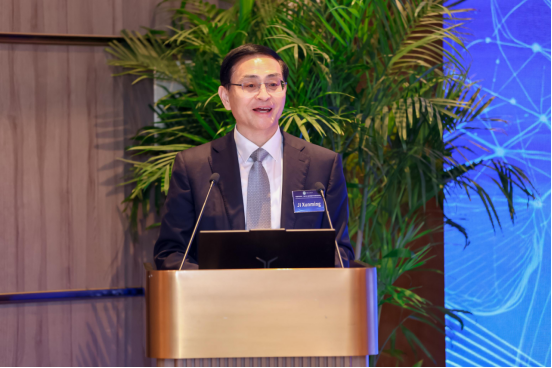
Opening Address by President Ji Xunming
In his address, Professor Richard Horton, Editor-in-Chief of The Lancet, stated that China is emerging as a vital force in the global advancement of medical science. China’s practices in stroke prevention and control not only serve the Chinese people but will also provide crucial lessons for the world, particularly for low- and middle-income countries. He highlighted the “Healthy Weight Management” initiative proposed by China’s National Health Commission as a noteworthy example of such practice. The Lancet remains committed to being a partner to the Chinese medical community, continuously propelling Chinese experience, evidence, and voices onto the global stage. He pointed out that this Commission is not merely conducting a scientific review but is embarking on a forward-looking, systematic exploration. It should be grounded in high-quality evidence and articulate a bold, ambitious vision for the future landscape of stroke prevention and control. He emphasized that the publication of the Commission’s report will not mark the end of its work, but rather a new starting point for translating research findings into policy and practice, and for continuously improving health systems and patient care.
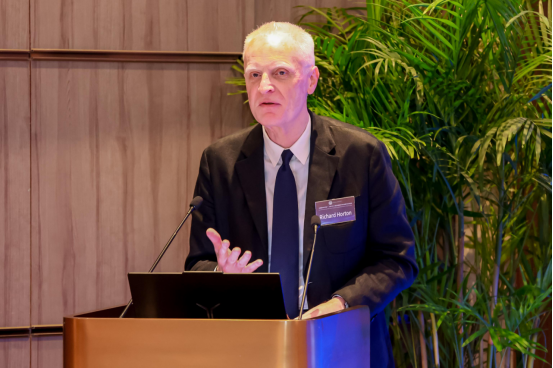
Opening Address by Editor-in-Chief Richard Horton
During the opening ceremony, Wang Hui, Senior Executive Editor for Asia at The Lancet, provided a comprehensive overview of the positioning, objectives, developmental history, and output requirements of The Lancet Commissions. She noted that The Lancet Commissions have produced numerous benchmark reports with global impact in major fields such as clinical medicine, public health, and global health. High-quality commission reports must not only be grounded in rigorous evidence but also present distinct viewpoints, original frameworks, and forward-looking visions. Through interdisciplinary collaboration, they should yield actionable policy recommendations and drive subsequent implementation, evaluation, and sustained impact.
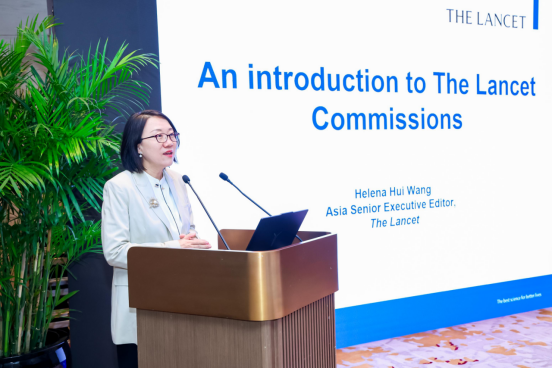
Remarks by Wang Hui, Senior Executive Editor for Asia at The Lancet
The launch meeting comprised three segments: keynote addresses, breakout sessions, and a plenary session. During the keynote session, five leading scholars from home and abroad shared their latest research findings. Academician Ji Xunming delivered a keynote titled “Systematic Practices in Stroke Prevention and Control in China and the Strategic Vision of the Million Disability Reduction Project.” He systematically outlined the “Chinese characteristics” of stroke prevention and control and the phased achievements of the Million Disability Reduction Project, emphasizing that hypertension is the primary modifiable risk factor. He stated that the project has entered a critical sprint phase featuring a closed-loop chain of population screening, prevention and control, efficient transfer, effective treatment, rehabilitation to reduce disability, and relapse prevention. The next step will anchor on the “3-4-5” strategic goals: reducing the incidence rate by 30%, the disability and mortality rate by 40%, and the recurrence rate by 50%, thereby serving the Healthy China initiative by alleviating the national stroke disease burden. Based on data from the China Kadoorie Biobank (CKB), Professor Prabhat Jha from the University of Oxford pointed out that the 5-year stroke recurrence rate in China stands at 41%. Hypertension, smoking, alcohol consumption, dyslipidemia, and elevated BMI are core modifiable factors, and the application of cigarette excise taxes—a highly effective measure—remains insufficient in China. Professor Arthur Liesz from Ludwig Maximilian University of Munich discussed stroke immunity and neural injury mechanisms, identifying several novel interventional targets. Related innovative therapies have entered clinical trials, offering new avenues for full-cycle prevention and control. Professor Nizal Sarrafzadegan from Isfahan University of Medical Sciences emphasized that over 80% of strokes are preventable, and that community-wide population strategies yield greater benefits than high-risk screening alone. The current bottleneck lies in implementation gaps, urgently requiring policy support, financing, and cross-sectoral collaboration. Professor Majid Ezzati from Imperial College London noted that while the reduction in stroke mortality in China ranks among the top in Asia, the pace of decline has slowed among women. Improving the quality and effectiveness of hypertension management is the core priority. The impact of obesity is largely mediated through factors like blood pressure, and the rising trend of obesity among younger populations warrants close attention. These five experts provided multidimensional perspectives and forward-looking insights into stroke prevention and control from the dimensions of systematic practice, epidemiology, translational mechanisms, community-based prevention, and global trends.
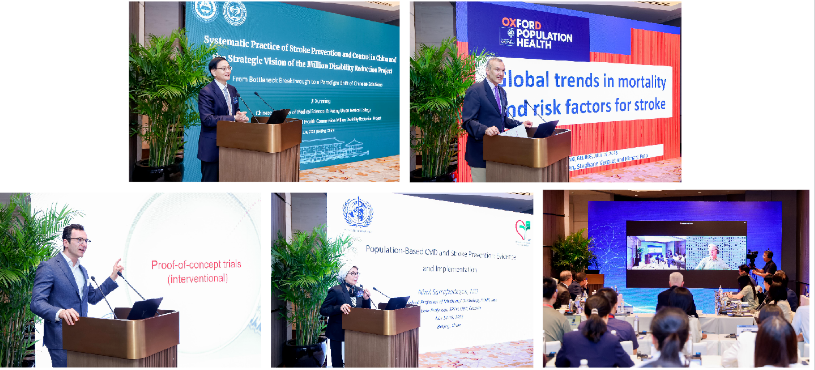
Keynote Addresses by Academician Ji Xunming, Professor Prabhat Jha, Professor Arthur Liesz, Professor Nizal Sarrafzadegan, and Professor Majid Ezzati
During the breakout sessions, commissioners and working groups started with macro-level themes and progressively focused on core priority issues, key determinants, and data methodologies. Through in-depth discussions, they continuously refined research directions and ultimately formulated a standardized list of issues and actionable implementation pathways. Building on this, participating commissioners reached preliminary consensus on key topics such as priority directions for policy interventions, optimization of monitoring systems, and the development of innovative platforms, clarifying the overall direction and approach for the Commission’s future work.
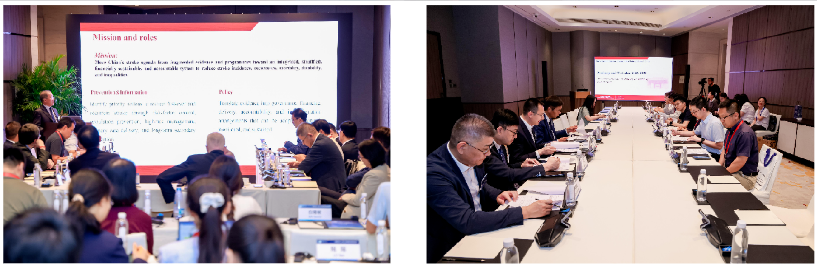
Breakout Sessions
The successful convening of this launch meeting marks the official entry of the CAMS–The Lancet Commission on Reducing the Stroke Burden in China into its substantive implementation phase. Moving forward, the Commission will fully leverage its advantages in international and multidisciplinary collaboration, adhere to independent, scientific, and evidence-based research principles, and continue to produce high-quality commission reports and policy outcomes. It will drive the translation of scientific evidence into health policies and practices, contributing Chinese wisdom to reducing the stroke disease burden in China, advancing the Healthy China initiative, and promoting global brain health governance.
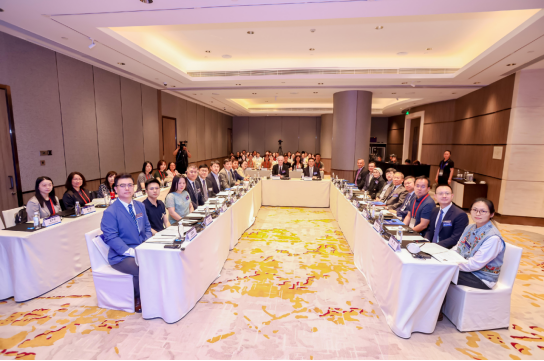
Scene of the Launch Meeting
The CAMS–The Lancet Commission on Reducing the Stroke Burden in China was jointly initiated by the Chinese Academy of Medical Sciences and The Lancet, with Academician Ji Xunming serving as Chair. With the core mission of reducing the stroke disease burden and improving health outcomes in China, the Commission leverages multidisciplinary integration and international collaborative networks. It is dedicated to scientifically assessing the stroke disease burden, investigating the underlying mechanisms of stroke development among Chinese residents, and focusing on building a comprehensive prevention and control system. The Commission will drive the development and implementation of policy tools, facilitate the efficient translation of clinical practices and public health research evidence, help resolve pain points and challenges in China’s stroke prevention and control, support the achievement of national health goals, provide reference experiences for low- and middle-income countries, and contribute to global stroke prevention and control objectives.
International Affairs Office

